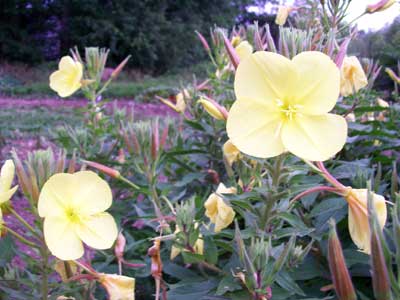
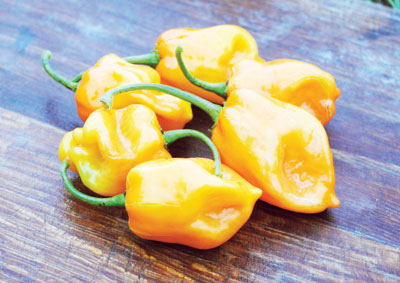
As the year begins we’re eager to start sowing seeds, but nervous about starting too early and having big, leggy transplants and nowhere to plant them. There are lots of crops we can and should start in January: bulbing onions, rhubarb, artichokes, celery and celeriac, parsley, and spring flowers (like poppies, chamomile, and evening primrose). Long season hot peppers (like habañero) can be started at the end of January; peppers are generally slow to germinate. We’ll start our seeds indoors, or outside in cold frames or the hoophouse, for transplanting later in the spring.
Be aware of when you want to plant and decide when to sow transplants by counting back from then! Overly large transplants suffer greater transplant shock and may have reduced yields. Brassicas like kale, collards, cabbage, and broccoli should have 3-4 true leaves and be about six weeks old when you transplant. Tomatoes and eggplants also need about six weeks, and peppers need 8-10 weeks. In our area we transplant most brassicas in mid-March, so we’ll wait until early February to sow. We provide recommended planting dates (PDF) >>
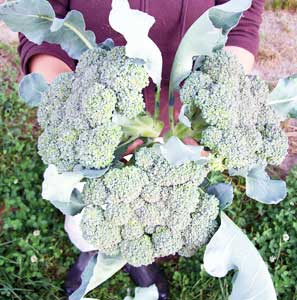
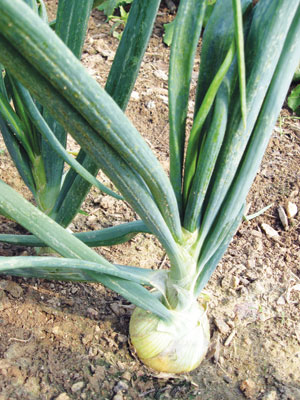
Sow bulbing onions for transplant now if you haven’t sown them already. Those in the lower South should have already sown Short Day Length bulbing onions, like Vidalia, last fall. In-between areas like us will have the best results growing Long to Intermediate Day Length bulbing onions, and starting them in December or January. Transplant out when they’re still thinner than a pencil! Read about growing bulbing onions >>
Artichokes and rhubarb should be sown in January and grown in cold frames to vernalize. They need the exposure to colder temperatures now to put on much growth later.
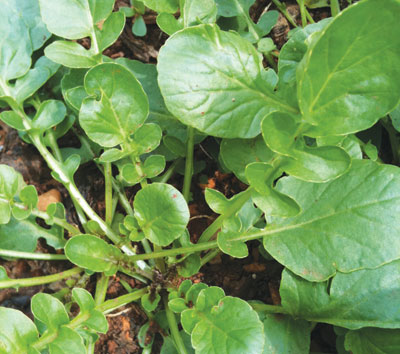
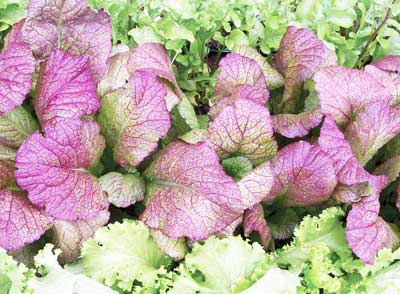
Winter has been warm all over the South: we’ve been sowing greens in cold frames and the hoophouse every couple weeks since fall. You can sow a variety of winter hardy greens (spinach, cress, mustard greens, arugula) throughout January. Remember, plants grow slowly in winter’s low light – even in warm greenhouses your starts may not put on much growth until the sun is stronger.
There’s still work to be done outside, even if it’s too early to be putting out plants. On nice days, prepare your beds if the weather is warm and dry enough. Then cover with mulch or row cover (prevent erosion on bare soil!) until you’re ready to plant. And don’t forget to look after your perennials – most fruit trees need pruning in winter, before they start to bud.
Request a free copy of our new catalog if you haven’t received one yet. We do expect to run out of some varieties, so order early while things are still in stock.
Happy winter gardening!


Hi Paul,
I really enjoy reading your blog. The only problems I have is I live in Virginia. Do you have recommended planting dates for my area. I have been told we are in zone 7. My zip code is 22554. I look forward to planing a spring garden of kale, lettuce, spinach, swiss chard, beets, peas and sugar snap peas. I planted garlic last November. I don’t know what to expect in late spring as this was the first time planting it.
Well, it’s not just my blog. It’s all of SESE’s blog and this post was written by Lisa. You’re in luck as we are also in Virginia, right on the edge between zones 6 and 7. Here’s a link to our recommended planting dates for Virginia: http://www.southernexposure.com/plantingdates.pdf
Louise, double-check your garlic beds–I’m a bit southwest of you (though more north than SESE), but in the same zone, and I’ve had some perennial onions and garlic that I planted last fall attempting to sprout already. The tips are getting a bit frost-nipped, but I’m trying to keep them mulched so that nothing gets growing too much too soon!
Question: your link suggests putting tomato transplants out on 21 April. This is on/around the last frost date for this zone. I was always under the impression that tomatos went out 2 weeks after last frost…around Mother’s Day. Can you give me an update or explanation? I am also in No. Virginia. Thanks.
We suggest a range of possible transplant dates for tomatoes in the mid-Atlantic. For the inland plains we recommend Apr 21–Jun 21, in the mountains May 10–Jun 10, and in coastal regions Apr 1–Jul 7.
You may find that April 21 is too early for your specific micro-climate and planting conditions, or that your transplant date varies from year to year. We recommend in our tomato cultural notes (online and in the catalog) that average soil temperature should be 60–65°F to plant outside.
Many gardeners will choose to risk a few light frosts in order to have very early tomato harvests. If frost is predicted cover up your plants the night before with row cover, or cover each plant with a plastic container or bucket. Be sure to keep an eye on the weather!
Since covering up early tomato plants can be extra work, as well as risky, we usually only plant out a few extra-early varieties around our last frost date, then wait a few more weeks to plant our main tomato crop.
Best of luck!
I am in the city and thinking about the possibility of planting corn on the parkway. Due to space limitations I am looking to maximize the space I have. it is maybe 70 square feet with a tree growing in the middle. I’d like to plant an early variety that could be spaced closer together than the corn recommended for three sisters planting with beans. I wonder if there is a shade tolerant pole bean that would be lightweight enough to grow between the rows without overwhelming corn such as Ashworth, Aunt Mary’s, or Black Mexican. Your catalog notes that Aunt Mary’s has “sturdy stalks.”Sturdy enough to hold beans? I thought I might add a bush variety of winter squash just to say I did. There will be no room for a vining squash to extend. Thanks for any advice you can give-
Hi Heather,
I know how tempting it can be to squeeze in a closely spaced three sisters garden! My first year with a large garden of my own I experimented with a three sisters planting on a single raised bed, about 30 ft. by 4 ft. The pole beans did great, but they strangled the sweet corn. Our zucchini, we grew Tender Grey, produced prolifically even in the crowded, shaded conditions. I’m not sure about the shade-tolerance of various bush winter squash.
We’ve known gardeners to have success growing half-runner beans on sweet corn. Southern Exposure sells a White Half-Runner Snap Bean. In my garden, I found that stalk sturdiness wasn’t a big problem with pole beans on sweet corn. The real issue was the vines interfering with the development of the ears themselves, by limiting their growth or preventing the husks from tightly covering the kernels. Dent corns have tighter husks that help protect the ears. With pole beans on sweet corn, you could try vigilantly patrolling for vines on the ears and removing them, but I think the half-runner beans would be a better solution.
Good luck! We’d love to hear how it goes!
Oops, the other issue is to make sure you have a large enough block of corn to ensure good pollination. I grew my three-sisters experiment alongside beds of sweet corn. You might consider hand pollinating your corn– it’s really not too difficult, just a matter of timing!
Heather,
Google “three sisters garden”. It’s a mix of corn, beans and squash. It was planted by the Native Americans. The corn supplies support for the beans, the beans add nitrogen to the soil for the corn and the squash suppress the weeds.
Good luck.
Thanks Lisa! I think I have room for a about a 3×5 block of corn with generous 1.5 foot spacing. minus space in the middle for the tree (might lose space for 4 ears of corn). That is about 11 corn stalks. We have a good bee population in the city! Hand pollinating would be easy with so few plants, also-
I live in Philadelphia, 19144, and project my last frost date to be around 4/15/2013. I’m starting rhubarb indoors from seed. When is it appropriate to transplant it to the cold frame for vernalization?